
Why Maternal and Infant Health Professionals Are Public Health Leaders
Public health is often associated with policies, campaigns, and systems-level solutions. But public health is also personal.
It lives in the everyday work of the professionals who support families during pregnancy, birth, postpartum, infant feeding, and early parenting. It lives in the conversations that help someone feel informed. In the guidance that prevents a small concern from becoming a larger crisis. In the support that helps families access care, resources, and stability.
For maternal and infant health professionals, this is important to remember.
Your work is not separate from public health. It is public health.
Maternal and infant health is one of the clearest expressions of public health in action
When professionals support healthier pregnancies, safer births, stronger postpartum recovery, improved feeding outcomes, and better access to care, they are not only helping individuals.
They are shaping community health.
Maternal and infant health outcomes influence family well-being, child development, community stability, and long-term health across generations. This means the work of doulas, lactation professionals, community health workers, educators, and nonprofit leaders reaches far beyond one appointment, one class, or one moment of care.
It has ripple effects.
That is what makes this workforce so important.
Public health is not only built in boardrooms or policy spaces. It is built in homes, clinics, classrooms, community programs, and care conversations. It is built every time a professional helps close a gap between what a family needs and what they are actually able to access.
Support, education, and trust are public health interventions
Not every public health intervention looks like a formal campaign.
Sometimes it looks like helping a parent understand what is normal in postpartum recovery and when to seek support.
Sometimes it looks like improving access to breastfeeding education before feeding challenges escalate.
Sometimes it looks like offering culturally responsive labor support that helps a family feel informed, respected, and less alone.
Sometimes it looks like helping someone navigate community resources, benefits, referrals, or follow-up care that they may not have been able to access otherwise.
These moments matter because public health is not only about treatment. It is about prevention, education, access, and continuity.
Professionals who work closely with families are often positioned to notice needs early, answer questions clearly, and provide support before stress compounds or barriers grow.
That is public health leadership in practice.
The workforce matters because outcomes do not improve on intention alone
There is often a lot of conversation about improving maternal and infant outcomes. But outcomes do not improve because people care. They improve when professionals are prepared, systems are strengthened, and support is delivered with skill and consistency.
This is where workforce development matters.
If we want stronger maternal and child health outcomes, we need professionals who understand more than their individual role. We need professionals who can see the broader picture: access barriers, communication breakdowns, cultural responsiveness, family stressors, care coordination, and the impact of social determinants on health.
We need a workforce that is not only compassionate, but trained.
That includes professionals who know how to educate clearly, support families without judgment, build trust across different communities, and respond to real-life challenges with both evidence and adaptability.
Preparation matters because families do not experience care in separate categories.
They experience it as one connected journey.
Public health leadership does not require a title
Many professionals underestimate the level of leadership they are already carrying.
Leadership in maternal and infant health is not limited to executives, program directors, or policymakers. It also belongs to the people doing direct service, community outreach, education, and family support every day.
It belongs to the doula who helps a family feel informed and empowered in labor.
It belongs to the lactation professional who protects a feeding relationship through skilled, timely support.
It belongs to the CHW who bridges the gap between a family and the services they need.
It belongs to the educator or nonprofit leader building programs that make care more accessible, relevant, and responsive.
Leadership is not always loud.
Sometimes it looks like consistency.
Sometimes it looks like advocacy.
Sometimes it looks like creating a safer experience for one family at a time.
But make no mistake. That is leadership.
Stronger communities require stronger professional preparation
Families deserve more than fragmented support. They deserve professionals who are ready to serve with knowledge, confidence, humility, and real-world skill.
That is why training matters so much in maternal and infant health.
Professional education should do more than share information. It should prepare people to think critically, communicate effectively, respond to complexity, and serve families in ways that are evidence-based and culturally responsive.
This is especially important in a field where trust, timing, and lived experience shape outcomes so deeply.
When professionals are better prepared, families are better supported.
And when families are better supported, communities are stronger.
That is not a small contribution. That is public health impact.
Maternal and infant health professionals are helping shape what is possible
National Public Health Week is a reminder that public health is not abstract. It is built through people, practice, and everyday action. For maternal and infant health professionals, this should be both an encouragement and a challenge.
An encouragement, because your work matters far beyond what is always visible.
A challenge, because this field needs professionals who are willing to keep learning, keep growing, and keep strengthening the way they serve.
The future of maternal and infant health will not be shaped by awareness alone. It will be shaped by a workforce that is equipped to lead.
And that leadership is already needed now.
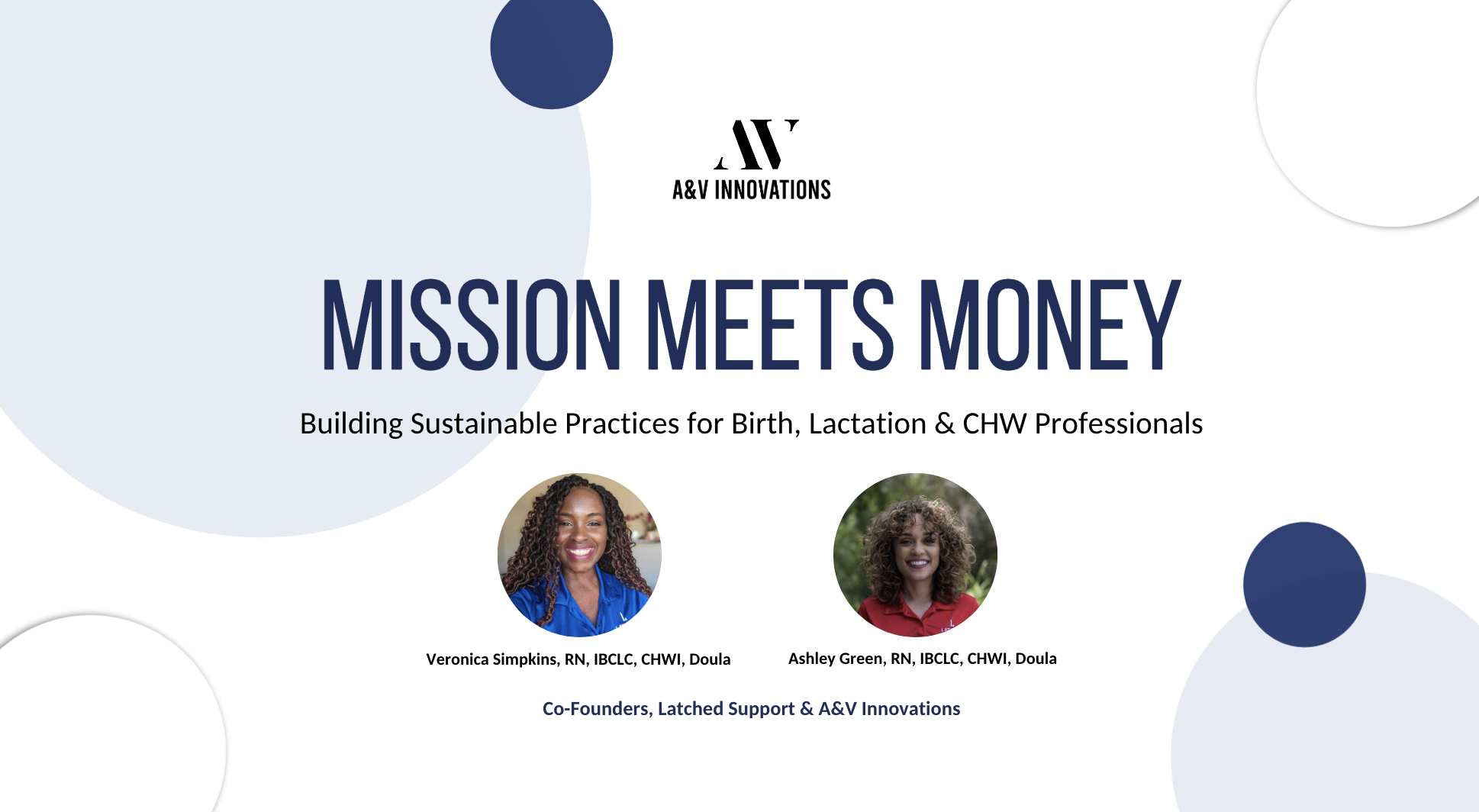
Public health impact also requires sustainable professionals. Download A&V Innovations’ free Mission Meets Money worksheet to reflect on your impact, income, and structure, and identify the next shifts needed to build a stronger, more sustainable care practice.
